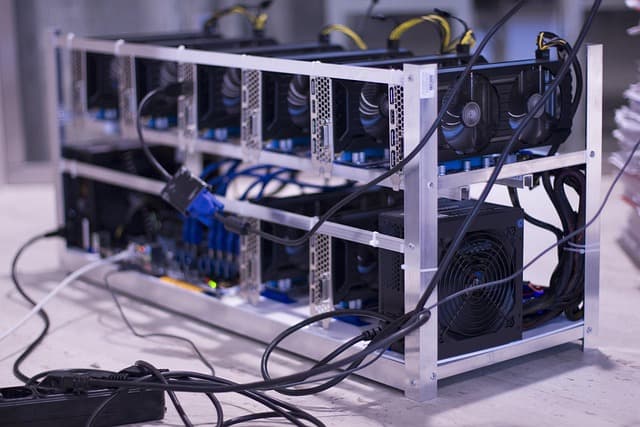
Cryptocurrency mining remains one of the most vulnerable areas in the blockchain industry. Physical infrastructure, network protocols, hardware firmware, and even BGP routes can all become points of attack. The industry has experienced several serious incidents in recent years, each of which has forced participants to rethink their approaches to defense.
Here are five real-life cases that were milestones in the evolution of mining security:
Antbleed: the Bitmain firmware flaw (2017)
In 2017, researchers discovered that the firmware of Bitmain’s Antminer ASIC miners contained a feature called “Antbleed” – a hidden HTTP request to an external server that allowed Bitmain to remotely disable any device by sending a simple “0” signal.
Implications: While Bitmain claimed it was a “testing” tool, users saw it as a centralized control mechanism and a potential threat.
What changed: After the scandal, firmware auditing began to pick up, interest in open source alternatives (e.g. Braiins OS) grew, and users began to pay more attention to hardware sovereignty.
BGP attacks on the Bitcoin network (2014-2017)
Research (including from ETH Zurich and other groups) showed that BGP internetwork routes could be used to intercept traffic between bitcoin nodes and pools. This allowed for:
- isolate the nodes;
- slow the spread of blocks;
- attack miners and deprive them of their rewards.
Implications: The problem was particularly acute for pool providers and data centers whose connections could be intercepted at the Internet infrastructure level.
What changed: Some pools began using TOR and VPN connections, as well as implementing application-level encryption (p2p encryption in Bitcoin Core) to counter such attacks.
Selfish Mining: attack from the inside (2013-present)
Selfish Mining is a strategy in which miners do not publish the block found immediately, but try to create an advantage by hiding the chain. This technique has proven that the attack is possible even with less than 33% hash rate.
Implications: While its difficulty in actual implementation remains a matter of debate, anomalies indicating such practices in Monacoin and Bitcoin Cash have been reported as early as the 2020s.
What’s changed: Chain monitoring tools have emerged, and clients themselves have started to implement mechanisms for early detection of such deviations (based on publication times and pool behavior patterns).
NiceHash pool hack (2017)
In December 2017, hackers broke into the authorization system and stole over 4,000 BTC (~$60 million at the time) from users’ accounts. NiceHash provided a hashrate rental service, and the attackers redirected funds to their address via APIs and stolen keys.
Consequences: The reputational damage was huge. Despite promises of refunds, many users lost money.
What’s changed: Since the incident, the industry has become much more serious about:
- API security;
- two-factor authentication;
- models for storing funds on cloud mining platforms.
Fires and power surges on large farms (2021-2023)
As the industry grew in size, massive equipment failures and fires began to occur, caused by:
- poor quality wiring;
- power overloads;
- lack of surge protection.
Examples:
- A farm fire in Sichuan Province, China (2021)
- Data center burnout in Texas (2023) due to lightning strikes
Consequences: Huge losses, downtime for weeks and even bankruptcies of mining companies.
Farms have started:
- Install industrial surge protectors (surge protection),
- switching to diesel generators with automation,
- separate the racks by load group.
Conclusion
Each of these incidents reminded the community that security in mining is not just a matter of antivirus and firewalls. It is a holistic discipline that encompasses network connectivity, electrical engineering, protocols, and software.
In an increasingly competitive and risky environment, only those who make security part of their strategy rather than a stopgap measure will survive.